When the weather turns cold in coastal North Carolina, it tends to catch people off guard. We’re used to mild winters, salty air, and sea breezes—not frozen pipes and cracked hoses. But every few years, a real cold snap rolls in, and homes that aren’t prepared can suffer costly damage.
Whether you live here full-time, own a second home, or manage a rental property, a little preparation now can save you a lot of stress later. Here’s a practical, no-nonsense guide to getting your home ready before the temperatures dip.
1. Protect Your Pipes Before They Freeze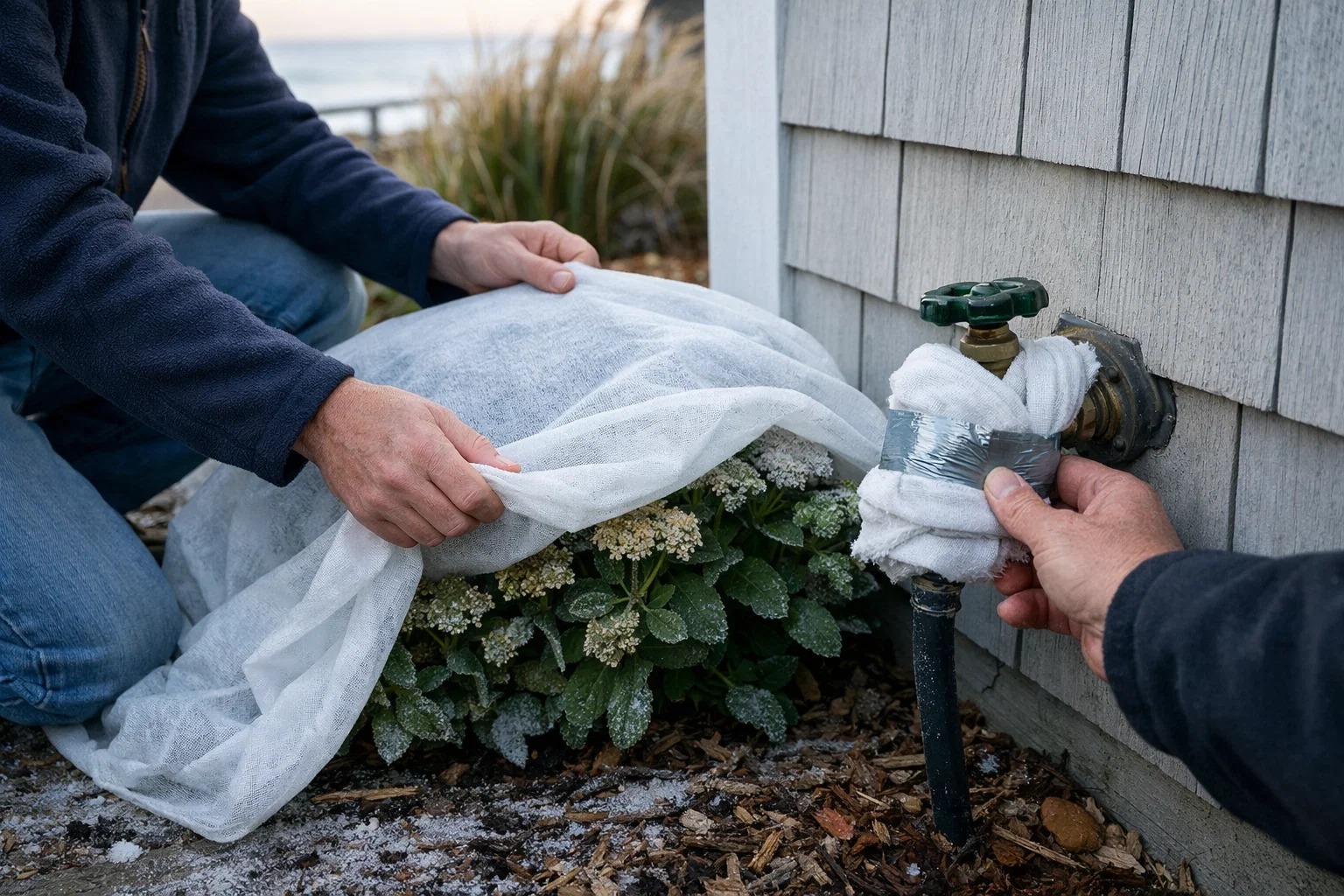
Frozen pipes are one of the most common and expensive problems during cold snaps—and they can happen quickly.
What to do:
-
Insulate exposed pipes in crawl spaces, garages, and attics
-
Disconnect garden hoses and shut off exterior faucets
-
Wrap outdoor spigots with insulated covers
-
Let faucets drip slightly during extreme cold to keep water moving
-
Open cabinet doors under sinks to allow warm air to circulate
In coastal homes, plumbing is often more exposed than in colder regions, so this step matters more than most people realize.
2. Don’t Forget the Outdoor Plumbing and Irrigation
Sprinkler systems, outdoor showers, and pool lines are especially vulnerable.
Smart moves:
-
Turn off and drain irrigation systems
-
Shut down and winterize outdoor showers
-
Cover pool equipment and exposed valves
-
Make sure any exterior water lines are fully drained
Many homeowners focus on the inside and forget the outside—until a cracked pipe shows up in the yard.
3. Seal the Drafts and Lock in the Warmth
Cold air finds its way in through the smallest gaps, especially in older homes and beach cottages.
Check and seal:
-
Windows and doors (weather stripping works wonders)
-
Crawl space vents
-
Attic access points
-
Dryer vents and utility openings
A few tubes of caulk and some weather stripping can make a noticeable difference in both comfort and heating costs.
4. Get Your Heating System Ready to Work
You don’t want to discover a problem with your heat when the temperature is already in the 20s.
Before the cold hits:
-
Change air filters
-
Test the thermostat
-
Make sure vents are open and unblocked
-
If you have a fireplace, check that the flue opens properly
-
Schedule a quick HVAC check if the system hasn’t been serviced recently
Even in coastal Carolina, heaters can sit unused for long stretches. A quick check now avoids surprises later.
5. Protect Plants, Landscaping, and Outdoor Features
Freezing temperatures can damage tropical plants, shrubs, and even outdoor fixtures.
Simple protections:
-
Cover sensitive plants with frost cloth or old sheets
-
Bring potted plants indoors or into the garage
-
Wrap young trees and delicate shrubs
-
Drain and store outdoor fountains and water features
Landscaping is part of your home’s value—protecting it is part of smart ownership.
6. Check the Crawl Space and Attic
These areas are often “out of sight, out of mind,” but they’re where cold damage loves to hide.
Look for:
-
Proper insulation
-
Any signs of moisture or drafts
-
Open vents that should be closed in winter
-
Loose ductwork
A quick inspection can prevent mold, frozen pipes, and heat loss.
7. If You’re Away, Plan Ahead
If this is a second home or rental property, cold snaps are even riskier because no one is there to notice a problem.
Before you leave:
-
Set the thermostat no lower than 55°F
-
Shut off the main water supply if possible
-
Ask a neighbor or property manager to check in
-
Make sure emergency contact information is up to date
Peace of mind is worth the extra five minutes.
8. Use the Cold Snap as a Home Health Check
Cold weather has a way of revealing weaknesses: drafts, leaks, old windows, poor insulation. Take notes. These are the kinds of improvements that not only increase comfort but also add value when it’s time to sell.
A Final Thought
Coastal living is about ease, comfort, and enjoying the lifestyle—not dealing with avoidable home repairs. A little preparation before a cold snap can save you money, protect your investment, and keep your home exactly where it should be: warm, dry, and problem-free.
And if you’re thinking about buying, selling, or relocating in Brunswick County or along the North Carolina coast, the team at Discover NC Homes is always here to help. From finding the right community to matching you with the perfect home for your lifestyle, they know this area inside and out—and they’re happy to guide you every step of the way.
You can start exploring available properties at
Find the best property for you: https://discovernchomes.com/search-homes/
Or reach the team directly at 910.363.4387 or frontdesk@discovernchomes.com.
Their office is conveniently located at 4320 Southport-Supply Road, Suite 100, Southport, NC 28461.
Whether you’re preparing your current home for winter or planning your next move, Discover NC Homes is ready when you are.